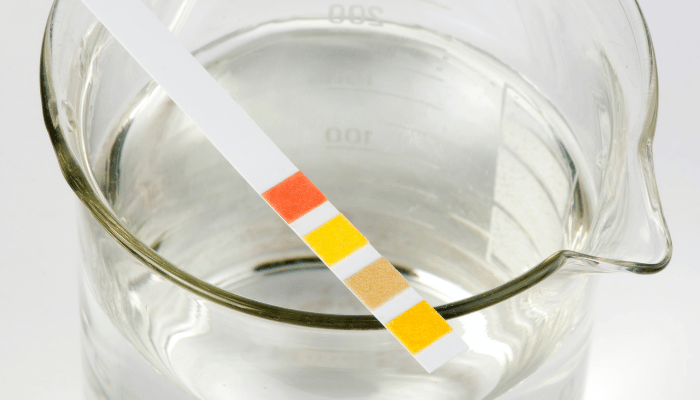
Your well water test results just came in, and it probably looks like a foreign language. Rows of abbreviations, decimal points, and numbers with no obvious “good” or “bad” attached to them — it’s one of the most common calls we get at WaterCure USA. Homeowners across Buffalo and Western New York do the right thing by testing their water, and then get stuck trying to figure out what the report is actually telling them. This guide breaks down the terms you’re most likely to see, what the numbers mean for your home, and when a result means you should act quickly rather than wait.
Start With the Units, Not the Numbers
Most results are reported in ppm or mg/L, and the good news is those two units mean exactly the same thing — one milligram of a substance per liter of water. Some contaminants, especially ones that matter in tiny amounts like lead or certain bacteria byproducts, are measured in ppb or µg/L instead, which is a thousand times smaller than ppm. If a result says “ND,” that means non-detect — the lab didn’t find that substance at a level its equipment could measure. ND is what you want to see next to anything on the more serious end of the list, like bacteria or lead.
What Each Result on Your Report Means
pH Level
pH Level tells you how acidic or alkaline your water is, on a scale where 7 is neutral. Water below 7 is acidic and can corrode plumbing and fixtures over time; water above 7 is alkaline and can contribute to scale buildup. Most WNY well water runs slightly on the harder, more alkaline side, which ties directly into the next result you’ll likely see.
Hardness
Hardness measures the calcium and magnesium dissolved in your water, usually reported in grains per gallon (GPG) or mg/L. This is the number behind soap scum, cloudy dishwasher glasses, and that dry, filmy feeling on your skin after a shower. It isn’t a health concern, but anything above 7 GPG is generally considered hard, and a lot of Western New York wells test well above that.
Total Dissolved Solids (TDS)
Total Dissolved Solids, or TDS, is the combined weight of everything dissolved in your water — minerals, salts, and metals together. A high TDS reading isn’t automatically a problem on its own, but it’s a useful clue that something else on the report (usually hardness or iron) deserves a closer look.
Iron
Iron shows up as a specific ppm reading, and it’s one of the most common issues we test for in this region. Even a small amount — as little as 0.3 ppm — is enough to cause the orange and reddish-brown staining a lot of local homeowners deal with in toilets, sinks, and laundry. If your iron result comes back elevated, it’s worth reading through our full breakdown of what causes those stains and how to fix them.
Nitrates
Nitrates are one of the few results on this list that call for real attention, especially in homes with infants or pregnant family members. The EPA’s safety threshold is 10 mg/L, and anything above that is considered unsafe for infant formula and drinking water in general. Nitrates most often come from agricultural runoff, septic systems, or fertilizer, which makes them more common in rural well water than in municipal supplies.
Coliform Bacteria and E. coli
Coliform Bacteria and E. coli should always read “absent” or “ND.” Unlike most of the other results on your report, this isn’t a matter of degree — any detectable presence means the well should be treated and retested before the water is used for drinking or cooking.
Sulfate and Hydrogen Sulfide
Sulfate and Hydrogen Sulfide are usually behind that “rotten egg” smell so many well owners in our area know well. It’s rarely a health hazard, but it’s a strong sign of sulfur bacteria in your well or plumbing system. If that smell sounds familiar, our guide on water odors walks through what’s actually happening and how it gets resolved.
When a Result Means You Shouldn’t Wait
Most of what shows up on a water test is manageable and common — hardness, iron, and mild pH imbalance are all things we treat every day. But a few results mean you should stop using the water for drinking or cooking until it’s addressed: any detectable coliform bacteria or E. coli, nitrates above 10 mg/L, or lead above the EPA’s action level of 0.015 mg/L. If your report shows any of these, give us a call before your next glass of water rather than waiting for your next scheduled test.
What to Do With Your Results
A lab report tells you what’s in your water. It doesn’t tell you which treatment actually solves the problem, and that’s the part homeowners get stuck on most. Iron, hardness, and sulfur often show up together in the same well, and treating one without accounting for the others usually means paying for equipment that doesn’t fully fix the issue. That’s where a walkthrough with our team helps — we’ve been reading well water reports for Buffalo and Western New York homes for almost 40 years, and we can tell you in plain language what your specific numbers mean and what it would take to fix them.
If you haven’t tested yet, or if it’s been a couple of years since your last one, WaterCure USA offers free well water testing for homeowners throughout Buffalo, Amherst, and the surrounding Western New York area. And if you already have a report in hand and just want help making sense of it, reach out — we’re happy to walk through it with you at no cost.