If you’ve turned on a faucet in your Western New York home and been met with a smell like rotten eggs, you’re dealing with one of the most common, and most misunderstood, well water complaints we hear. That odor almost always comes down to one culprit: hydrogen sulfide gas. The good news is that it’s rarely as alarming as it smells, and in nearly every case, it’s fixable.
Below, we’ll walk through what’s actually causing the smell, how to tell how serious it is, and which treatment approach fits your situation, whether you’re on a private well in Chautauqua County or dealing with hot-water-only odor in a home on Grand Island.
What Causes That Rotten Egg Smell?
The smell itself comes from hydrogen sulfide gas (H2S), and it can show up for a few different reasons. Knowing which one applies to your home is the first step toward picking the right fix.
Sulfur bacteria. Naturally occurring bacteria in well water or plumbing feed on sulfur and produce hydrogen sulfide gas as a byproduct. You’ll typically notice this at cold water taps, well casings, and pipes, and the smell is often stronger after a faucet sits unused for a while.
Natural sulfur in groundwater. Chemical reactions between groundwater and sulfur-bearing rock or soil layers release hydrogen sulfide gas directly into the aquifer. This type shows up in both hot and cold water, consistently, since the sulfur is already dissolved in the source water.
Water heater anode rod. The magnesium anode rod inside a water heater tank reacts with sulfate-reducing bacteria, creating a chemical reaction that produces hydrogen sulfide. This one is hot water only. If your cold water smells fine but hot water smells like eggs, this is almost always the cause.
Quick tip: If the smell only shows up in hot water and your cold water smells fine, skip ahead to the water heater anode rod. That’s the cause in the vast majority of cases we see.
How Bad Is It? Sulfur Severity at a Glance
Hydrogen sulfide is typically measured in parts per million (ppm). Here’s a general guide to what different levels tend to mean for your home, though a professional water test is the only way to know your exact number.
Below 0.5 ppm — Mild. Faint odor, often only noticeable right when a faucet is first turned on. Usually a nuisance, not a health concern.
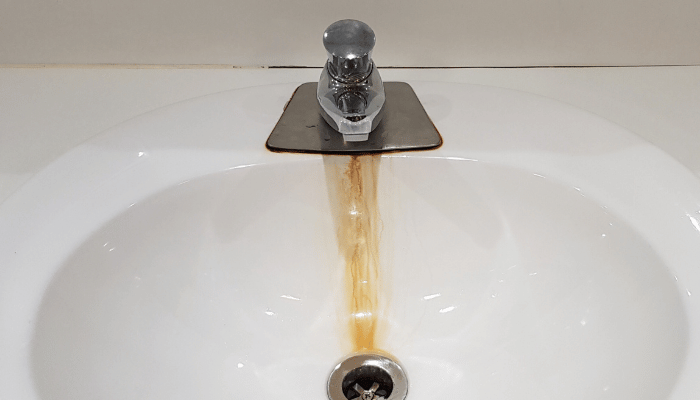
0.5 – 1 ppm — Moderate. Clear, consistent rotten-egg odor. Can affect taste, tarnish silverware, and discolor plumbing fixtures over time.
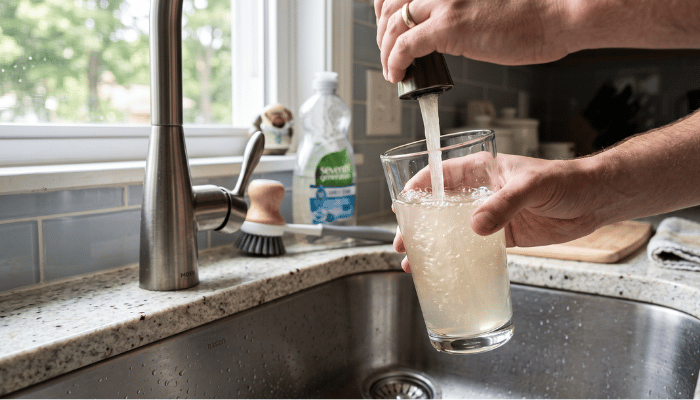
1 – 3 ppm — High. Strong, persistent odor throughout the home. Water may appear cloudy or slightly discolored. Treatment is strongly recommended.
Above 3 ppm — Severe. Overpowering smell, potential corrosion of pipes and appliances. Levels this high warrant professional water testing right away.
Is Sulfur Smell in Well Water a Health Concern?
For most homes, the honest answer is that it’s more of a nuisance than a hazard, an unpleasant taste and smell issue rather than a direct threat. But there are a few reasons not to just live with it:
- Sulfur bacteria can sometimes coexist with other water quality issues worth identifying through testing.
- Hydrogen sulfide is corrosive to plumbing, water heaters, and fixtures over time, even at moderate levels.
- Persistent odor can affect everything from coffee and cooking to laundry and showers, which adds up to a real quality-of-life issue.
If you’re on well water anywhere in Western New York, from Springville to Colden to East Aurora, and you’re noticing this smell for the first time, it’s worth having your water tested rather than guessing at the cause.
How to Get Rid of Rotten Egg Smell in Your Water
Treatment depends on where the smell is coming from and how severe it is. Here’s how the most common solutions stack up:
Anode rod replacement — best for odor limited to hot water only. Swapping the magnesium rod for an aluminum or powered anode rod stops the chemical reaction inside the water heater.
Oxidizing filtration — best for low-to-moderate, whole-house sulfur odor. Injects a small amount of oxidant (such as air or ozone) ahead of a filter media bed to convert sulfur gas into a filterable form.
Aeration systems — best for moderate-to-high, whole-house sulfur odor. Introduces air into the water to oxidize hydrogen sulfide gas, which is then vented out before water enters your home’s plumbing.
Chlorination + filtration — best for severe odor or bacteria-driven sulfur issues. A metered chlorine feed oxidizes hydrogen sulfide and controls sulfur bacteria, paired with a carbon filter to remove residual chlorine taste.
Note: A standard water softener does not remove hydrogen sulfide. If you already have a softener and are still smelling sulfur, that’s expected. Softeners and sulfur treatment solve two different problems and often work best installed together.
Not Sure How Serious Your Sulfur Smell Is? Get a free, no-obligation water test from WaterCure USA and find out exactly what’s in your water. Schedule My Free Water Test
Get to the Bottom of the Smell, With a Free Water Test
The only way to know for certain whether you’re dealing with sulfur bacteria, natural groundwater sulfur, or a water heater issue is to test your water. WaterCure USA offers free water testing throughout Western New York, including Buffalo, Grand Island, Lockport, and Chautauqua and Erie Counties, so you get a clear answer and a treatment plan built around your specific results, not guesswork.
Local Well Water Note
We hear this question often from homeowners across our Western New York service area. Buffalo, Grand Island, Lockport, Chautauqua County, and Erie County all have pockets of naturally sulfur-rich groundwater, and private well owners in these communities are the most likely to notice it. If that’s you, you’re far from alone, and a fix is usually more straightforward than the smell suggests.
Ready for Water That Doesn’t Smell Like a Problem? WaterCure USA has helped Western New York homeowners solve sulfur odor for over 30 years. Let’s find out what’s really in your water. Contact Watercure USA 716-946-3598